Restaurant Furniture Buying Guide
Introduction and Article Outline: Why Restaurant Furniture Deserves Serious Attention
Choosing restaurant furniture is not a finishing touch; it is a business decision that shapes comfort, table turnover, cleaning routines, staff movement, and even how long guests decide to stay. The right chair can make a quick lunch feel effortless, while the wrong table base can turn service into a daily obstacle course. This guide explains how to compare style, durability, layout, and cost so every purchase supports both the dining experience and the bottom line.
Many buyers start with appearance, and that is understandable. Furniture is visible, immediate, and emotional. Guests notice it before they read the dessert menu and long before they leave a review. Yet the most successful buying decisions balance atmosphere with performance. A beautiful dining chair that wobbles after a few months becomes expensive very quickly. A bargain table top that chips around the edges can quietly drain the room of polish, one damaged corner at a time. In hospitality, furniture is scenery, equipment, and workflow tool all at once.
Well-chosen furniture affects several core metrics. Comfortable seating can encourage repeat visits. Properly sized tables can improve seat count without making the room feel cramped. Durable finishes reduce replacement cycles. Easy-clean surfaces save labor during busy shifts. Operators often discover that furniture choices influence parts of the business that seemed unrelated at first, including cleaning supplies, staffing pace, storage, acoustics, and how flexibly the floor can be reconfigured for events or seasonal changes.
This guide is organized to help buyers move from broad vision to practical evaluation:
- How to match furniture with concept, service style, and guest expectations
- What materials and construction details signal true commercial durability
- How to plan dimensions, spacing, comfort, and accessibility
- How to budget wisely and compare vendors beyond the initial quote
Think of the dining room as a stage before the performance begins. Guests may never praise the tensile strength of a welded frame or the cleanability of vinyl upholstery, but they absolutely feel the difference when every piece works as intended. The goal of this article is simple: help restaurant owners, managers, designers, and first-time operators buy furniture that looks right, wears well, and keeps earning its place long after opening week excitement has faded.
Match Furniture to Your Concept, Service Style, and Customer Behavior
The best restaurant furniture is context-sensitive. A quick-service lunch spot, a neighborhood café, a steakhouse, and a cocktail bar may all serve food, but they do not ask the same things from their seating and tables. Before comparing finishes or requesting samples, define how your operation works. Are guests expected to stay for twenty minutes or two hours? Will the room host laptop users during the day and larger social groups at night? Does the menu encourage shared plates, private conversation, or rapid turnover? Furniture should answer those questions before it tries to impress anyone.
Service style is one of the clearest starting points. Fast-casual restaurants usually benefit from lighter, durable pieces that are easy to move, wipe down, and rearrange. Fine dining often leans toward higher-comfort seating, richer materials, and wider spacing because guests are expected to linger. Cafés may favor a mix of two-top tables, communal seating, and counter stools to support solo visitors and informal meetings. Family restaurants often need forgiving surfaces, sturdy frames, and seating that can handle constant use from guests of different ages. In each case, the furniture tells customers how the room is meant to be used.
It also helps to map furniture types to guest behavior:
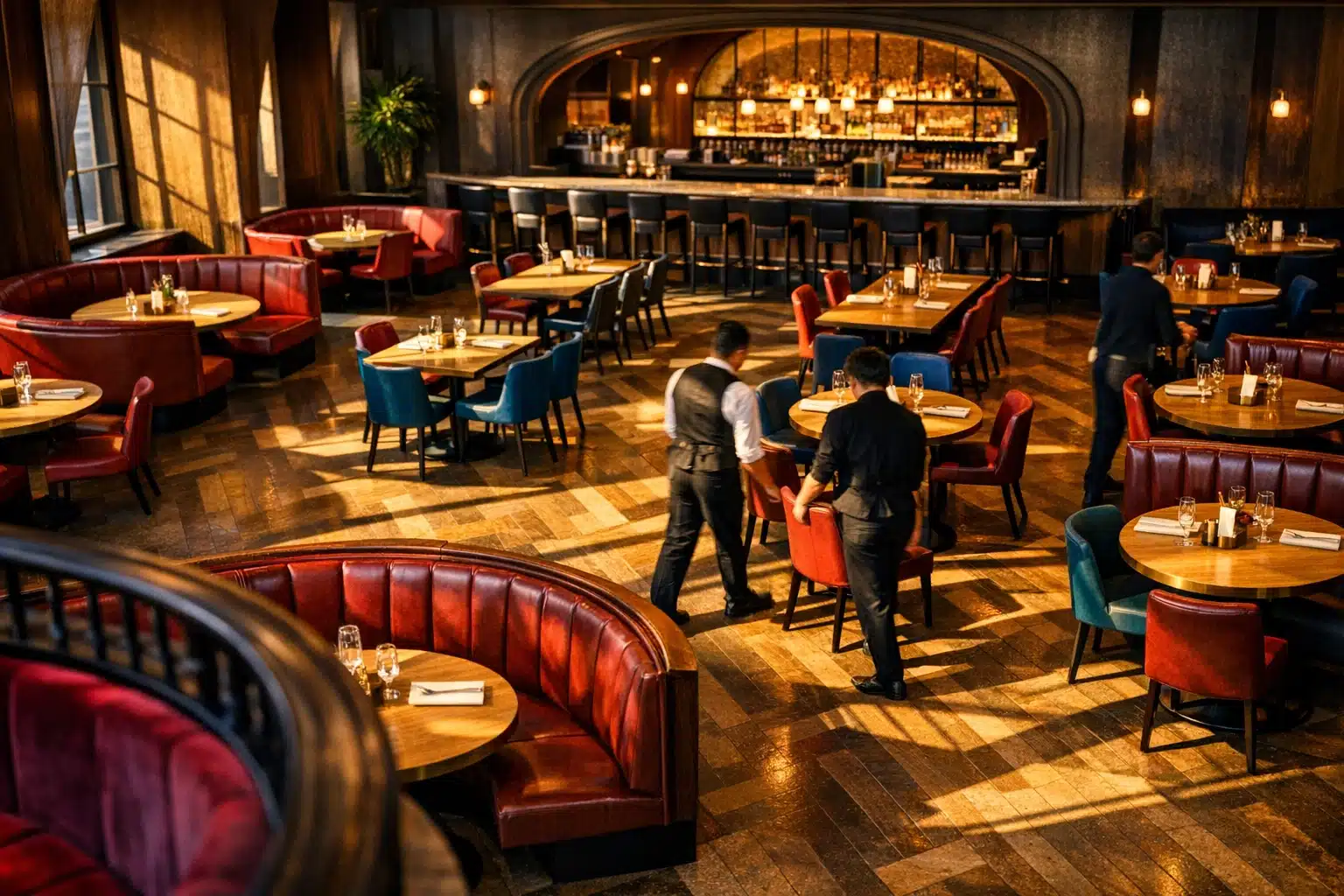
- Booths create privacy, improve perceived comfort, and can make wall space work harder
- Freestanding chairs offer flexibility for cleaning, layout changes, and varied party sizes
- Bar stools increase seat density but require careful attention to stability and foot support
- Communal tables encourage energy and social interaction but may not suit every concept
Brand identity matters too, but it should be translated into practical language. Instead of saying you want a room that feels “modern” or “warm,” turn those adjectives into buying criteria. Modern may mean powder-coated steel, clean lines, and laminate tops with minimal visual clutter. Warm may mean wood tones, upholstered seats, softer edges, and lower-contrast finishes. Once translated, the concept becomes measurable and easier to brief to vendors.
Guest profile adds another layer. A restaurant near offices may see weekday lunch rushes and short dwell times, making easy-clean, high-turnover furniture a better fit than plush lounge seating. A destination dining room may need greater comfort, more generous table sizes, and acoustically softer materials because people stay longer and spend more. If your customer base includes older diners, seat height, back support, and ease of entry become especially important. If your venue serves many families, corner protection and stain resistance deserve more attention than fashionable but fragile finishes.
In short, furniture should serve the business model, not just the mood board. When you buy for real guest behavior, the room feels more natural, staff work more efficiently, and the atmosphere becomes convincing rather than decorative.
Materials, Construction, and Durability: What Commercial Quality Really Looks Like
Commercial restaurant furniture lives a harder life than most residential furniture ever will. It faces sliding bags, dropped cutlery, frequent cleaning chemicals, fluctuating temperatures, and a constant parade of weight, friction, and movement. That is why material choice and construction details matter more than surface beauty. Two chairs may look nearly identical online, yet one may last five years and the other fail in twelve months because of how the frame, joints, and finish were built.
Wood remains popular because it feels familiar and can suit many concepts, from rustic bistros to polished dining rooms. Solid hardwood frames can be strong and refinishable, but quality varies widely. Look for reinforced joints and clear information about species and finish. Veneers can look refined, yet edge damage may become visible in high-impact areas. Metal frames, especially steel or aluminum, are often chosen for strength and consistency. Powder-coated finishes usually outperform basic paint in busy environments because they resist chips and corrosion better. For table tops, laminate and compact laminate are common commercial options because they are easy to clean and less demanding than natural stone or unfinished timber.
Construction tells an equally important story. Some signs of better-quality manufacturing include:
- Welded metal joints that appear even and solid rather than rough or spot-fixed
- Corner blocks and reinforced brackets on wooden chairs and tables
- Leveling glides to help stabilize furniture on imperfect floors
- Commercial-grade fasteners that can be tightened or serviced without damaging the frame
- Published weight capacities and warranty terms
Upholstery deserves careful scrutiny. In restaurants, fabric is not just about color; it is about maintenance, stain management, odor retention, and replacement cost. Vinyl and faux leather remain common because they wipe clean easily and can handle spills well, though lower-quality versions may crack over time. Performance fabrics can offer a softer feel and a more residential look while still resisting wear, but they should be checked for commercial durability ratings. Buyers often review abrasion testing, such as double-rub figures, as one indicator of suitability. Foam density and seat construction also matter. A chair that looks plush on arrival can flatten quickly if the internal materials are weak.
Outdoor furniture requires an even stricter filter. Sun exposure, moisture, and temperature swings punish poor materials fast. Aluminum, treated steel, commercial resin, and synthetic wicker designed for exterior use are common choices. Outdoor cushions should use quick-dry foam and removable covers when possible. Stainless hardware is worth considering in coastal or wet environments.
A useful buying rule is to ask not only “What is it made of?” but also “How will it age?” Scratches, loose joints, fading, seam failure, and peeling finishes do not arrive all at once; they creep in. Good restaurant furniture ages with dignity. Bad restaurant furniture starts telling on itself before the first year is over.
Sizing, Layout, Comfort, and Compliance: Building a Floor That Actually Works
Even excellent furniture can disappoint if it is the wrong size or arranged poorly. Layout planning is where aesthetics meet mathematics. A dining room must welcome guests, let staff move efficiently, support safe circulation, and still deliver enough seats to make the numbers work. The temptation is often to maximize capacity, but overfilling a floor can reduce comfort, slow service, and make the whole room feel tense. A restaurant should feel alive, not like a puzzle assembled one chair too far.
Start with standard dimensions, then adapt them to your concept. Most dining tables are around 28 to 30 inches high, while dining chair seat heights often fall between 17 and 19 inches. Bar-height tables are commonly around 40 to 42 inches, paired with stools around 28 to 30 inches high. A square two-top may use a 24-inch or 30-inch table top depending on plate size and service needs. Round tops can soften traffic flow and work well in tighter rooms, while rectangular tables are efficient for lining walls and combining into larger formats.
Common planning guidelines can help buyers avoid obvious mistakes:
- Allow enough space for guests to sit and rise comfortably without colliding with nearby tables
- Maintain service aisles that let staff carry trays safely, especially during peak hours
- Check local accessibility, fire, and building rules before finalizing the plan
- Test table base placement so guests are not fighting a central column or four awkward legs
- Consider where high chairs, strollers, and waiting guests will go during busy periods
Comfort is not accidental. Seat pitch, back angle, cushion firmness, footrests on stools, and edge profiles on tables all affect the dining experience. A chair can be stylish but tiring if the back is too upright or the seat too shallow. Booths can be wonderfully comfortable, yet poor seat depth or overstuffed backs may force guests into awkward posture. If possible, sample furniture in person and sit in it for longer than thirty seconds. Ask different body types to test it. What feels acceptable for a quick showroom decision may feel very different halfway through a full meal.
Accessibility should be part of the plan from the beginning, not added as an afterthought. A good dining room offers a mix of seating options, clear paths, and tables that can serve a broad range of guests. Local code requirements vary, so operators should verify dimensions and counts with the appropriate authorities or design professionals. Beyond compliance, accessible planning simply makes the restaurant more usable and welcoming.
Finally, consider operational layout. Can staff reset tables quickly? Are there enough movable two-tops to handle changing party sizes? Does the host stand have sightlines to available seats? Does the cleaning team have enough clearance to work efficiently? Furniture that fits the room on paper but fails during service creates hidden costs in labor, guest frustration, and lost rhythm. The smartest layouts are the ones that feel effortless because every inch has a purpose.
Budgeting, Vendor Selection, and Final Takeaways for Restaurant Owners
Furniture budgets can expand quietly if buyers focus only on unit price. A chair quoted at a lower cost may still become the expensive option once freight, assembly, installation, replacement parts, lead time risk, and short service life are included. Smart budgeting looks at total cost of ownership rather than the opening invoice alone. In practical terms, that means comparing not just what a product costs to buy, but what it costs to use, maintain, repair, and eventually replace.
Begin by separating priorities into three buckets: guest-facing impact, operational necessity, and optional upgrades. Core dining chairs, table tops, and bases usually deserve the closest scrutiny because they absorb the heaviest wear and define the room visually. Accent stools, lounge pieces, or highly customized details may be phased in later if cash flow is tight. A staged purchasing plan can be better than filling the room with weak furniture simply because everything had to be bought at once.
When evaluating suppliers, ask detailed questions and compare the answers carefully:
- What is the expected lead time, and is stock actually available now?
- Are samples available for finish, upholstery, and construction review?
- What does the warranty cover, and what does it exclude?
- Can the vendor provide care instructions, replacement glides, and touch-up options?
- Are spare chairs, bar stools, or table tops available for future reorder?
- Who handles damage claims, assembly issues, or missing parts?
Custom furniture can be attractive because it helps a space feel distinctive, but it also introduces more variables. Custom pieces may bring longer lead times, higher minimums, and more complex approval steps. Stock or semi-custom lines usually reduce risk and make reordering easier. For many operators, a balanced approach works best: use reliable standard products for the majority of the floor and reserve customization for signature moments such as banquettes, host stands, or select feature tables.
Maintenance planning should be part of purchasing, not an afterthought. Confirm which cleaners are safe for each material. Order a small number of spare glides, touch-up markers, or replacement seat pads at the start. Train staff not to drag chairs or stack pieces that were not designed for stacking. These small habits can significantly extend furniture life.
For restaurant owners and operators, the final lesson is straightforward: buy furniture the way you would hire key staff. Look for fit, reliability, stamina, and the ability to perform under pressure. A well-chosen table or chair may never speak, but it contributes to every service, every first impression, and every return visit. When the furniture supports your concept, survives your pace, and still looks composed after countless covers, it stops being a purchase and becomes part of the business engine.